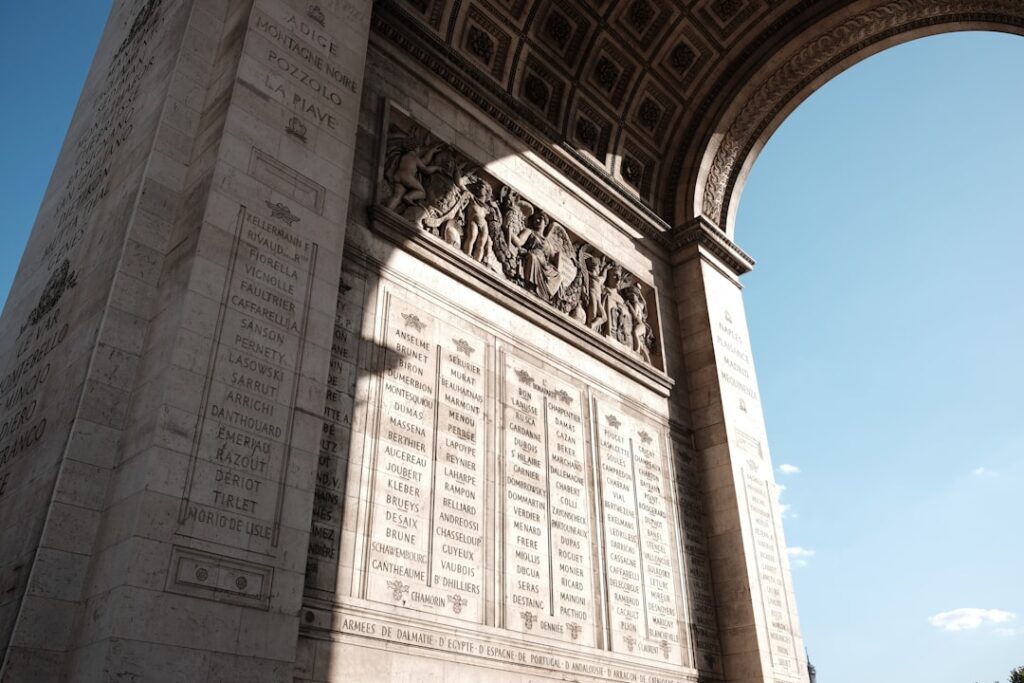






Introduction: A close-up on Trento’s architecture — from medieval stone to modern lines
Trento (Trento), the capital of the Trentino-Alto Adige region in northern Italy, is a city where architecture layers stories across time. Around every corner, façades stage conversations between Gothic, Alpine Renaissance and baroque restraint, with contemporary interventions woven in seamlessly. This article is a thorough, practical guide for lovers of graphic architecture and sculptural detail: we’ll explore emblematic monuments, museums that tell the city’s story, streets that make great photo routes, and local tips for experiencing Trento up close through its urban materiality.
Trento’s architectural richness lies as much in the quality of its buildings as in how they’re showcased in public space: paved squares, views over the Adige valley, stone slab roofs, stone arches, defensive towers and slender bell towers. The Castello del Buonconsiglio crowns the town from its hill and concentrates a wealth of decorative elements — frescoes, heraldic motifs, loggias — while Piazza Duomo brings together religious Gothic and civic Baroque with the cathedral, the Palazzo Pretorio and the Torre Civica. Further along, Renzo Piano’s MUSE (Museum of Science) offers a contemporary reading where modern lines and technical materials converse with the mountain scenery.
This guide is written for a varied audience: photographers, architecture students, curious travelers and professionals. You’ll find exact addresses, opening hours, up-to-date admission details and in-depth descriptions to help you understand what each site offers in terms of ornamentation, spatial organization and sensory experience. We also include practical tips to reach viewpoints, suggested themed routes (sculpted details, painted façades, old/new juxtapositions), and tricks for avoiding the crowds and making the most of natural light for your shots.
The narrative doesn’t stop at the monuments: it includes small streets like via Belenzani, gateways, wrought-iron signs and interior courtyards that reveal often-overlooked details. Trento is a city to listen to as much as to look at — a place where architecture emerges in the graphic patterns of its stone and in the way the past imprints everyday life. Grab your notebook, camera lenses and comfortable shoes: follow this route to discover Trento through the graphic lens of its architecture.
The Castello del Buonconsiglio and the fortifications — frescoes, towers and defensive perspectives
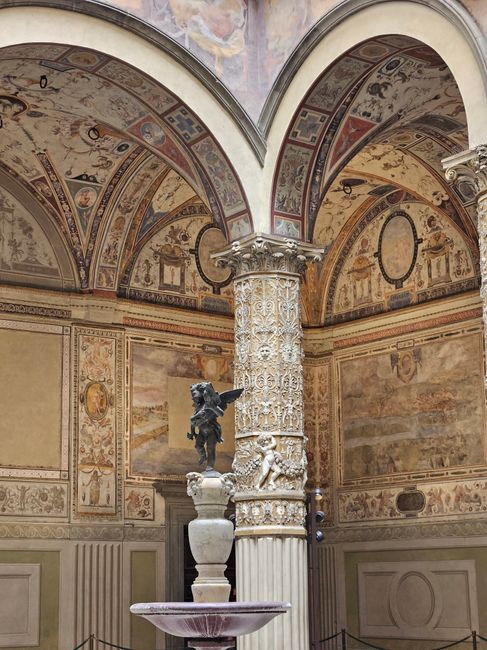
The Castello del Buonconsiglio is the essential reference point for understanding Trento’s architectural evolution. Perched on a gentle hill, it spans several buildings from different eras, from the 14th to the 16th centuries, forming a composite complex rich in graphic detail. Address: Castello del Buonconsiglio, Via Bernardo Clesio, 5, 38122 Trento TN, Italy.
Hours and admission (subject to change; recommendation: check online before you go):
- Opening hours: Tuesday to Sunday 9:00–19:00 (last entry 18:00), closed Monday.
- Admission: full ticket around €10.00, reduced €6.00, combined ticket (with temporary exhibitions) €12.00–€15.00.
What strikes you on approach are the stacked volumes and the succession of crenellated walls and towers: the Torre Aquila is famous for the « Cycle of the Months, » a series of 15th‑century frescoes representing the months of the year with exceptional narrative and coloristic quality. The loggias and inner courtyards provide ideal visual frames to photograph cast shadows and carved window surrounds. The walls also narrate power relations between prince-bishops and the local nobility through coats of arms, niches and vegetal motifs.
Practical tips:
- Climb the ramparts at sunset for low-angle light that reveals stone textures; you’ll also get a panoramic view over the town and the Adige valley from there.
- If you’re after graphic details, focus on lintels, archivolts and capitals of the inner portals — bring a prime lens in the 35–50 mm range and perhaps an 85 mm for carved details.
- Prefer visiting on a weekday to avoid crowds; audio guides and guided tours often included with admission help identify iconographic elements in the frescoes.
Suggested route and visual sequencing
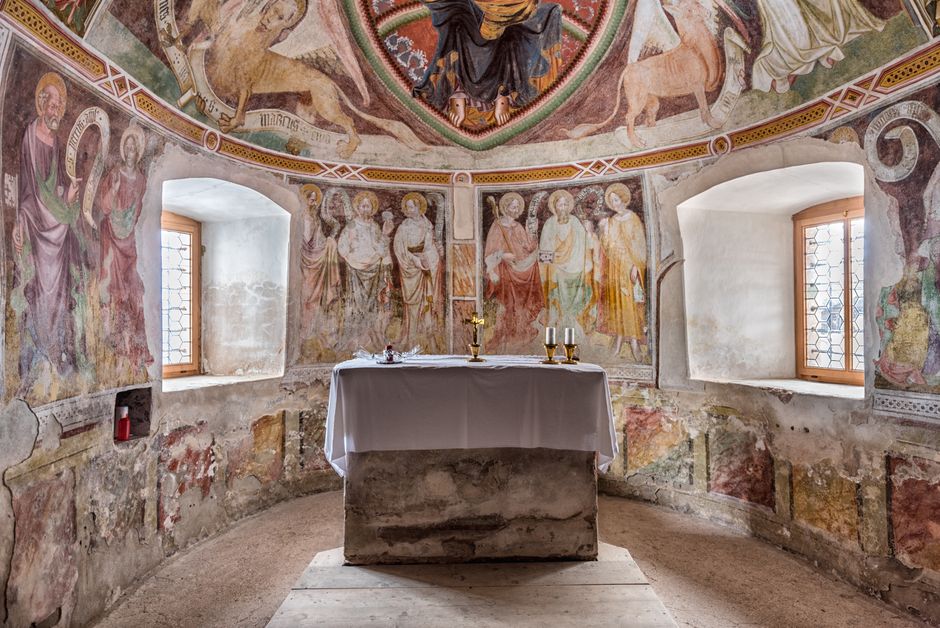
Start at the main entrance on Via Bernardo Clesio, cross the parade courtyard toward Torre Aquila, then follow the outer walls to reach the upper loggia: this route will let you observe, in sequence, the defensive monumentality, the interior decoration and the city views. Don’t miss the small lordly chapel for its woodwork and stained glass, and check out the temporary exhibitions that often explore restoration work and painting techniques.
Piazza Duomo and the religious core: cathedral, Palazzo Pretorio and Torre Civica
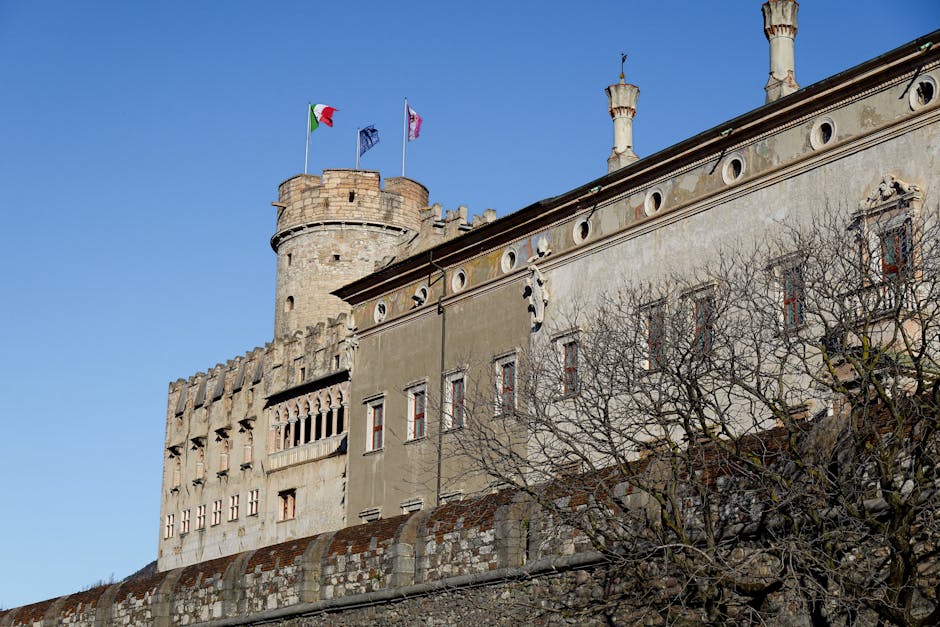
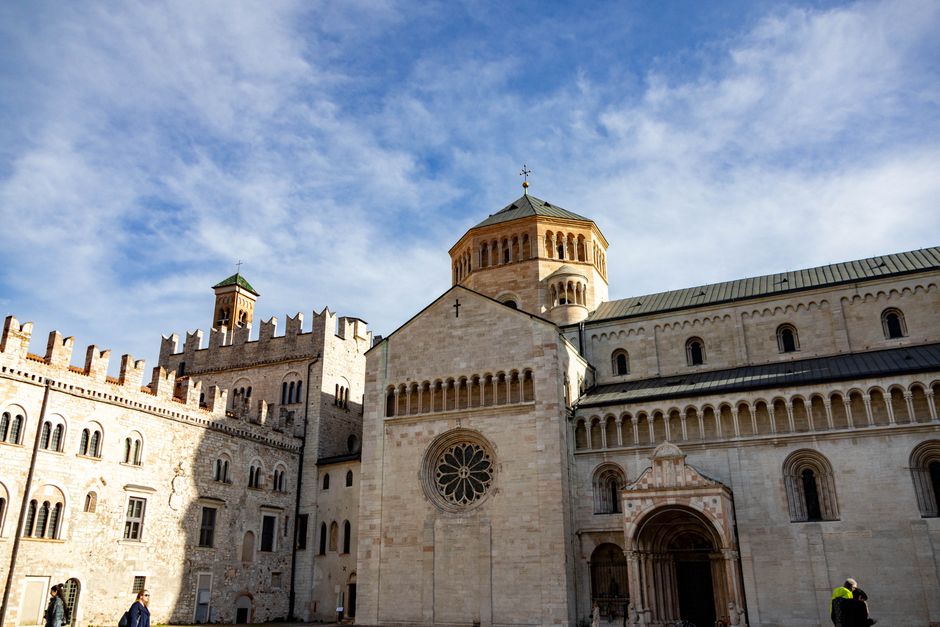
Piazza Duomo is Trento’s visual heart. It concentrates several key monuments that together offer a full reading of the city’s religious and civic architecture. Central address: Piazza Duomo, 38122 Trento TN, Italy. The main elements to observe are:
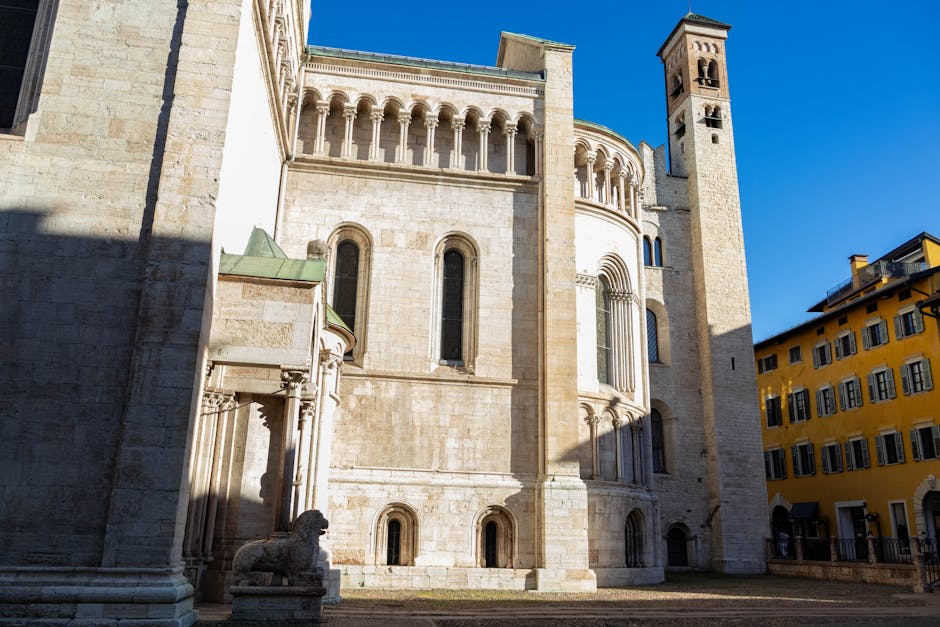
- Duomo di Trento (Cathedral of San Vigilio) — Piazza Duomo: Romanesque‑Gothic façade, Baroque interior rich in stuccoes and vaults. Entrance is free but guided tours or audio guides may cost €3.00–€5.00.
- Palazzo Pretorio — located directly on the square, it was the former seat of municipal institutions and shows sculpted façades and decorated halls. Address: Piazza Duomo 1, 38122 Trento.
- Torre Civica — a medieval watchtower offering a vertical viewpoint; access is often ticketed or limited to specific hours (entry around €3.00). Address: on Piazza Duomo, next to the Duomo.
Indicative opening times:
- Duomo di Trento: mass and visiting hours — 7:30–12:30, 15:00–19:00 (varies with the liturgical calendar).
- Palazzo Pretorio / Museo Diocesano Tridentino: generally 10:00–17:00, closed on some holidays.
- Torre Civica: typically open 10:00–17:30, with restricted access in winter.
The square’s graphic clarity comes from its alignments: the cathedral, the palace and the tower compose an urban façade in three planes, offering shifts in scale and stone treatment. Pediments, cornices and arches create sharp shadows at midday, while mosaics and reliefs narrate religious and civic episodes. For photographers, working with a wide-angle lens lets you capture the whole scene, but focusing on elements like capitals, tympana and wrought-iron doorwork also pays off.
Local tips:
- Arrive early morning or late afternoon to avoid tour buses; the soft light accentuates the warm tones of the limestone.
- Take a coffee break on one of the square’s terraces to watch the play of light and shadow on façades and observe local silhouettes.
- Visit the Museo Diocesano Tridentino (Piazza Duomo, 18) to contextualize liturgical objects and altarpieces — full ticket around €6.00; hours 10:00–17:00.
MUSE — contemporary architecture and its dialogue with the Alpine landscape
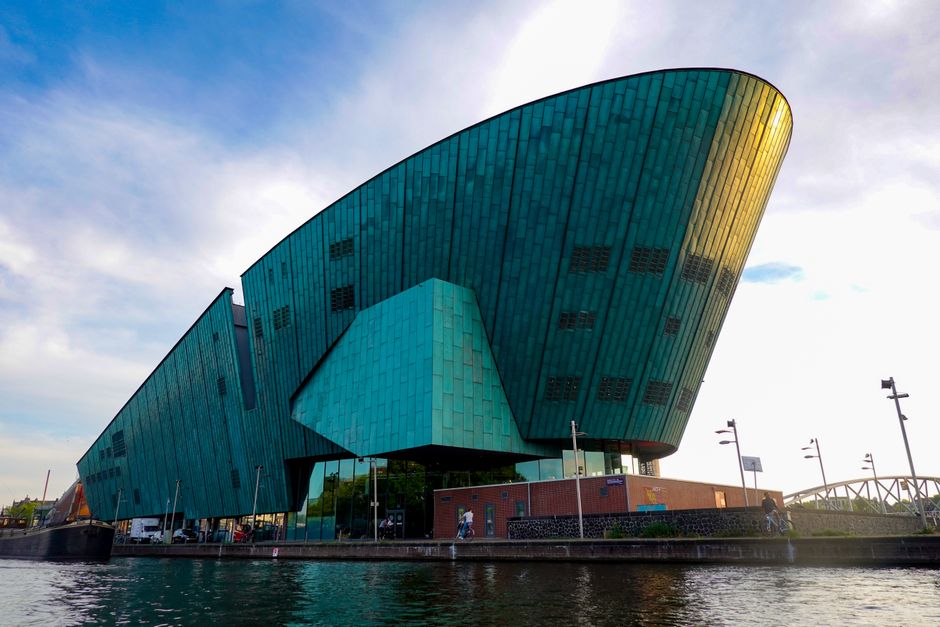
The MUSE (Museum of Science) is a strong contemporary counterpoint to Trento’s historic legacy. Designed by Renzo Piano and set along the Adige river, it presents contemporary architecture that engages with the mountain and the river. Address: MUSE – Museo delle Scienze, Corso del Lavoro e della Scienza, 3, 38122 Trento TN, Italy.
Hours and admission (check before visiting):
- Opening hours: generally 10:00–18:00 (last entry 17:00), closed on certain holidays.
- Admission: full €10.00–€12.00, reduced €8.00, child/student often €5.00–€6.00. Family rates and combined tickets available.
The architectural interest of the MUSE lies in its terraced structure, generous use of glass and steel, and a prismatic roof that captures light. Inside, vertical and horizontal flows are conceived as museum pathways: ramps, walkways and platforms provide varied perspectives on the displays and the outside. The museum is ideal for studying how contemporary architecture can insert itself into an old urban fabric: clean lines and industrial materials create a deliberate contrast with the stones and tiles of the old town visible through the windows.
Visitors are also fascinated by the views over the Adige and the mountains: the glazed façade frames natural scenes that change with the seasons and weather. The building is designed to be an educational object in its own right: beyond the exhibitions, pay attention to technical details (joints, anchors, seismic devices) and how topography is used to guide the visitor route.
Practical tips:
- Head to the exterior terraces to photograph the town with the river in the foreground and the mountains in the background; morning light is often the cleanest.
- Book tickets online in high season; check temporary exhibitions which may require a supplement.
- For architectural detail shots, bring a 24–70 mm lens to capture interior volumes and a telephoto to isolate structural elements.
Streets, palaces and small-scale features: via Belenzani, Palazzo Geremia and the urban fabric
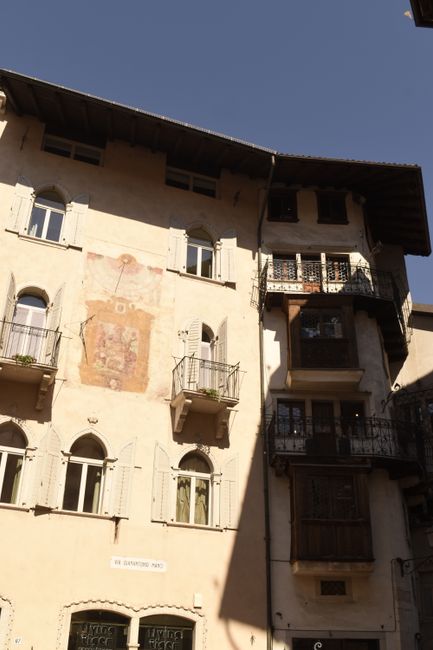
Beyond the headline sights, Trento is read through its streets — especially via Belenzani — and its private palaces. Via Belenzani is the liveliest axis for those who want to study civic façades and historic shop signs. Address: Via Belenzani, 38122 Trento TN. Here you’ll find several richly decorated townhouses and painted façades with trompe-l’œil, typical of Alpine urban culture.
Another notable building is the Palazzo Geremia (Piazza Battisti 11, 38122 Trento), a palace with façades decorated with clock faces, wrought-iron balconies and frescoes. These buildings testify to the importance of trade and administration in the city: ground-floor arcades, monumental portals and interior courtyards where decorative art mixes with everyday life.
Hours and access:
- Via Belenzani: public access, shops and façades visible all day.
- Palazzo Geremia: open for events, may host temporary exhibitions (check the local calendar for hours and possible free entry).
Detail attractions include:
- Old wrought-iron signs (often signed by local craftsmen) marking historic shops.
- Carved wooden portals and knockers still in use, bearing zoomorphic or floral motifs.
- Small squares and stairways that structure short visual axes: perfect for minimalist photographic compositions.
Navigation tips:
- Explore the city on foot, favoring off-peak hours (very early morning) to find compositions without people.
- Look for open interior courtyards: they often reveal patios with arches and stone staircases rich in texture.
- Ask local bookshops and cafés about themed walking guides — residents love sharing the history of houses and families that shaped the city.
Practical tips for photographing and studying Trento’s architecture
Approaching Trento through the lens of graphic detail requires both planning and openness to chance. Here are concrete recommendations:
- Gear: a wide-angle (16–35 mm) for full façades, a 24–70 mm versatile zoom for most situations, and a telephoto (70–200 mm) to isolate sculpted details. A lightweight travel tripod is useful for low-light interiors (some churches and museums allow tripod use on request).
- Timing: morning light (7:30–9:30) and late afternoon (17:00–20:00 depending on season) are ideal. Avoid harsh midday sun that washes out textures.
- Permissions: for professional photography (commercial reportage, publication), ask permission from institutions (Castello, MUSE, diocesan museums); photographer fees may apply.
- Accessibility: some towers and palaces have restricted access (narrow stairs, no elevator) — check conditions if you have reduced mobility.
- Useful apps: use local maps (Map of Trento), the tourist office (IAT Trento, Piazza Duomo, 18) and official museum websites for up-to-date hours and prices.
Conclusion: Trento, an open-air laboratory of graphic details
Trento is a city where architecture works like a collection of visual vignettes: each palace, tower, façade and doorway adds its note to the town’s eclectic urban symphony. The route from Castello del Buonconsiglio to the MUSE shows an architectural continuum where medieval and contemporary respond to one another smoothly, while Piazza Duomo concentrates the civic‑religious storyline. Exploring via Belenzani and the adjacent small streets reveals micro‑architectures — signs, door knockers, balconies — that tell stories of everyday life and local craftsmanship.
For anyone intrigued by façade geometry, the narrative sculpture of frescoes or the way stone captures light, Trento offers a rich, accessible study field. Visit early, take the time to linger in interior courtyards, climb the castle ramparts and the Torre Civica, then descend to the MUSE to measure the stylistic leap. Finally, make a habit of talking to locals: museum guides, booksellers and café owners often have anecdotes and technical insights that will enrich your understanding of the details you observe.
In short, Trento deserves to be wandered like an illustrated book: slowly, attentively and up close. Whether you’re a photographer, student or curious traveler, the city will reward you with graphic discoveries that leave a lasting visual impression. Safe travels and happy explorations among Trento’s stones, frescoes and contemporary lines.